

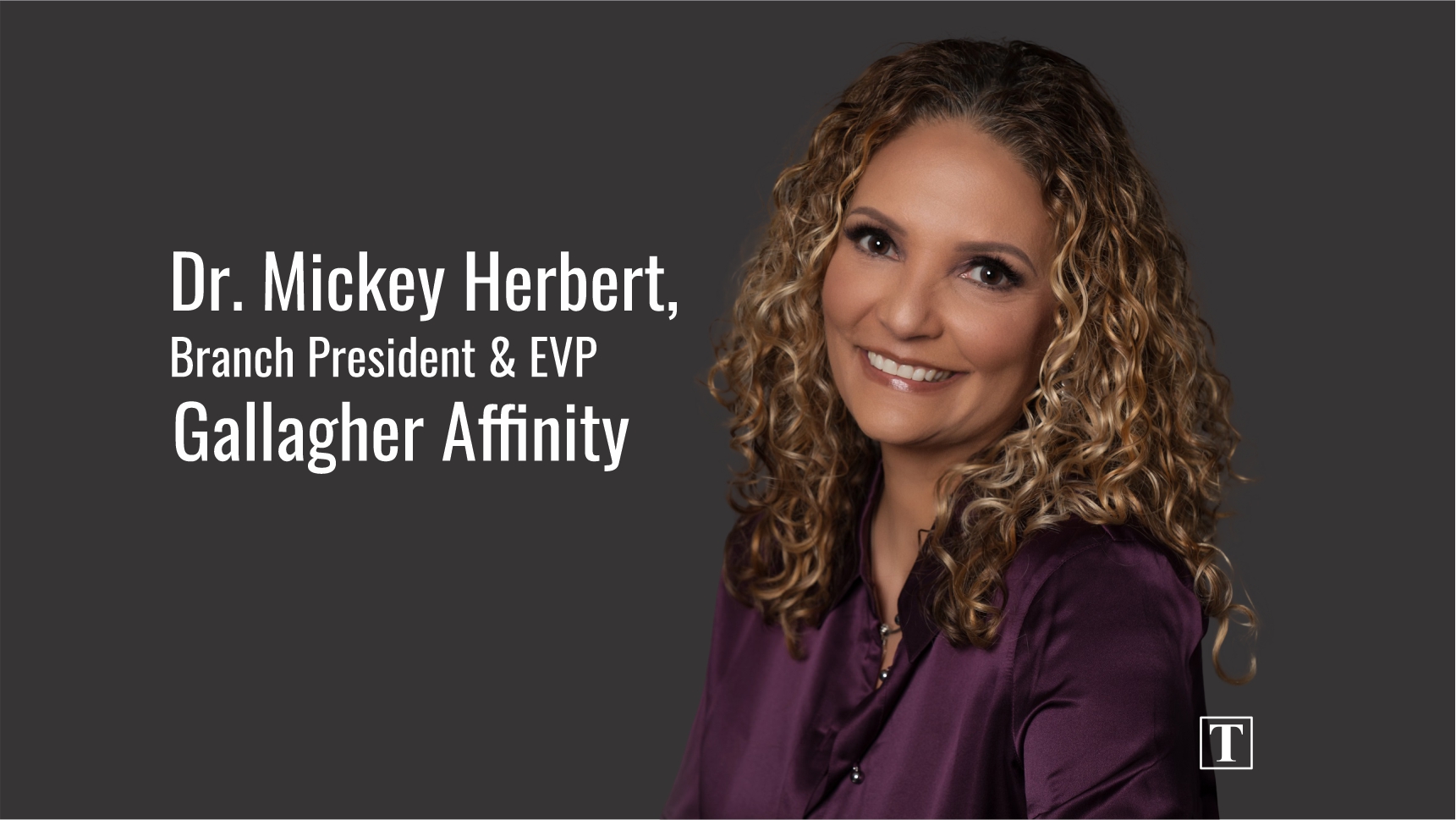
Leadership is often measured by outcomes, but its truest measure lies in intention, integrity, and the impact made over time. For Dr. Mickey Hunt Herbert, leadership has never been about a single title or moment. It has been about building trust, creating opportunity, and ensuring that organizational and personal growth go hand in hand.
With a career spanning insurance, programs, digital marketing, and large-scale organizational transformation, Mickey has navigated complex, matrixed environments with clarity and conviction. Today, as a leader at Gallagher, she is recognized for balancing strategic rigor with empathy, driving sustainable growth while cultivating cultures where people feel seen, heard, and empowered to lead.
Her journey reflects the central theme of this special International Women’s Day 2026 issue, Breaking the Glass Ceiling. Barriers existed, yet she chose to face them, challenge them, and then extend a hand to others climbing behind her. From leading transformative acquisitions and rebrands to championing diversity, equity, and inclusion as a core business imperative, Mickey’s leadership always centers on one belief: success is strongest when it is shared.
Fittingly, this International Women’s Day also marks Mickey’s birthday, a moment that symbolically aligns to create an opportunity for reflection with forward momentum. The Tycoon Magazine extends its warm wishes as she continues a leadership journey defined by purpose, progress, and the building of what comes next.
In the following conversation, Mickey shares her story in her own words, reflecting on pivotal moments, leadership lessons, the evolution of marketing and client engagement, and what it truly means to lift as you climb. Her responses offer not only insight into her professional path but also provide a thoughtful perspective on leadership, inclusion, and legacy in today’s changing world.
Could you walk us through your professional journey? How did you evolve into a growth-focused executive and strategist, and what key turning points shaped your path across marketing, sales, operations, and leadership roles?
My professional journey hasn’t been a straight path—it’s had its twists and turns—but I consider myself truly blessed. Along the way, I’ve been fortunate to have incredible mentors, unwavering family support, and invaluable colleagues. Rather than constantly chasing the next opportunity, I’ve immersed myself in my current role, focused on excelling and, by putting one foot in front of the other, let success pave the way. Though I’ve faced my share of challenges and difficult personalities, I knew that by working hard, delivering quality results, and, most importantly, ensuring my voice was heard, my accomplishments would speak for themselves.
Throughout my career, I’ve achieved several significant promotions that were truly transformative. The first came in 2013 when I was promoted to vice president during a period of major change in the organization. At the time, we made the bold decision to part ways with a $135 million partner and start from scratch with a new one that we felt aligned with our goals. It was a courageous move by my then-boss, who had been my mentor for decades before his retirement and, I’m happy to say, remains my friend. As a strong ally of minority leaders, he, a white man, believed I was the transformational leader needed for the challenge. Together with the team, we exceeded all expectations.
The second pivotal promotion came in 2016, when I was named president and chief operating officer (COO). My mentor and owner was preparing to retire, so my primary task was to prepare the company for sale. This significant responsibility required a complete reinvention of the organization, including finding the right marketing talent to lead us through a rebranding and positioning overhaul. On top of that was the paramount task of identifying and vetting potential acquirers and determining which was the right fit for the remaining employees. In 2018, we successfully sold the company to a Fortune 500 organization for a price that was not only acceptable but remarkable.
Since then, I’ve continued my journey with Gallagher and have been promoted twice. I’ve had the privilege of leading four additional branches, with a focus on driving revenue growth and fostering a strong, positive culture. I’m incredibly proud of the progress my team and I have accomplished together.
As a senior leader at Gallagher and a driver of organizational growth, what are your core responsibilities today, and how do you balance strategic vision, revenue growth, and culture-building in your role?
As a leader at Gallagher, my core responsibility is to embody leadership that inspires and motivates people to follow. This means being empathetic, passionate, decisive, visionary, innovative, inclusive, and a builder of a strong, positive culture. Leadership, to me, is about setting the tone for the organization and creating an environment where people feel empowered, valued, and motivated to contribute their best.
A significant part of my role is driving revenue growth and profitability, with a target of achieving a 10% year-over-year (YoY) increase in revenue while also improving profitability. To achieve this, I focus on ensuring that our Business Development, Marketing, and Operations leaders have the tools, resources, and support they need to succeed. I believe that empowering people and providing them with a clear vision is the foundation for sustainable growth. By fostering collaboration and encouraging open dialogue, I ensure that everyone feels included in the process of cultivating innovative solutions.
One way I balance strategic vision, revenue growth, and culture-building is through regular and transparent communication with my team. We hold frequent Town Hall meetings where we “open the books” and share our financial performance, discussing where we currently stand and where we need to be. This transparency not only builds trust but also aligns everyone around our shared goals and fosters a sense of ownership and accountability. By involving the team in these conversations, we create a culture of inclusivity and shared responsibility, which has been instrumental in consistently growing our book of business.
Additionally, I prioritize building strong partnerships with our suppliers and clients. We strive to conduct business in a way that reflects our values and makes others want to work with us. By being good partners and maintaining a reputation for integrity and excellence, we create long-term relationships that drive mutual success.
Ultimately, my role is to balance the big picture with the day-to-day execution. I focus on aligning our strategic vision with actionable goals, ensuring that we not only achieve revenue growth but also foster a culture where people thrive and feel proud to be part of Gallagher. This holistic approach has been key to our success and will continue to guide us as we grow and evolve.
You have worked across diverse sectors, including insurance, programs, and digital marketing. What pivotal experiences from these roles most strongly prepared you to lead complex, matrixed organizations and manage high-impact stakeholder relationships?
Throughout my career, I have embraced a core philosophy centered on honesty, authenticity, and treating every individual with equal respect and value. Whether they are on Wall Street or Main Street, in the C-suite or at the reception desk, a direct report, a peer, or the Chief Executive Officer (CEO), I firmly believe that what truly matters are character, contribution, and performance—not hierarchy.
One of the most important lessons I’ve learned is that every person in an organization plays a critical role in its success. We are all interconnected, like cogs in a wheel, and the organization cannot function effectively without each part working in harmony. This understanding has driven me to foster an inclusive culture where every voice is heard, and no one feels like a second-class citizen. Whether someone reports to me, works in a different department, or is a leader, I make it a priority to ensure that their perspectives are valued and considered.
In my experience across insurance, programs, and digital marketing, I’ve encountered diverse teams, stakeholders, and challenges. These roles have taught me the importance of collaboration and communication in navigating complex organizational structures. For example, in matrixed environments where teams often have overlapping responsibilities or competing priorities, I’ve learned to build bridges, align goals, and create a shared sense of purpose. By treating everyone with respect and fostering open dialogue, I’ve been able to break down silos and drive collective success.
Managing high-impact stakeholder relationships has also been essential in my career. Whether working with clients, suppliers, or internal teams, I’ve found that trust and transparency are the foundation of strong relationships. By being honest and consistent in my actions, I’ve built credibility with stakeholders and formed mutually beneficial partnerships. I’ve also learned to listen actively and adapt to the needs of different stakeholders, ensuring their goals align with the organization’s broader objectives.
One pivotal experience that shaped my leadership approach was leading cross-functional teams on a high-stakes project. The success of the initiative depended on the collaboration of individuals from different departments, each with their own priorities and challenges. By fostering an environment of mutual respect and ensuring everyone felt valued, I united the team around a common goal and delivered exceptional results. This experience reinforced my belief in the power of inclusivity and the importance of treating every individual as a vital part of the organization.
Ultimately, my ability to lead complex, matrixed organizations and manage high-impact stakeholder relationships stems from my commitment to treating people with respect, fostering inclusivity, and building trust. These principles have guided me throughout my career and continue to shape my approach to leadership today.
Looking back at your career so far, what major achievements, growth inflection points, or organizational transformations are you most proud of, and why do they stand out for you personally?
Looking back at my career, I am incredibly proud of the transformative impact I’ve had in the association and insurance space over the past three decades. I began my journey at Meridian One, an Alexandria, Virginia-based company that grew to serve more than 1,000 association clients . When Meridian One was acquired by Gallagher in 2018, I played a key role in integrating the business into Gallagher. Under my leadership, Member Services was formed and experienced remarkable growth, increasing annualized revenues by more than 150%, expanding its client base, and becoming one of the most respected association partners in the industry.
What stands out most to me is that my influence has extended far beyond financial performance. In 2020, I was honored to be promoted to Area President, overseeing the previously Meridian One business and two additional businesses. Then, in 2024, I was promoted again to lead the newly formed, internally branded network, which expanded my leadership responsibilities to include Member Services, Association Management, and the wholesale product division previously known as Coverdell. These milestones represent not just professional growth but also the trust and confidence placed in me to lead and transform organizations.
One of my proudest achievements has been advancing diversity, equity, and inclusion. I was appointed the inaugural Director of Gallagher Specialty’s Diversity and Inclusion Committee, where I brought together a cross-functional teams to launch initiatives that reached more than 500 employees. This committee became a model for Gallagher’s enterprise-wide diversity, equity, and inclusion (DEI) strategy, and it’s deeply fulfilling to know that our efforts have had a lasting impact on the company’s culture and values.
I’ve also had the privilege of contributing to the broader industry through thought leadership. My doctoral dissertation, “Examining the Correlation between Financial Performance and Gender Diversity on Boards of Fortune 500 Companies,” explored the relationship between financial success and gender diversity, positioning me as a trusted voice on the business case for inclusion. Additionally, I’ve spoken on panels, such as UPS Capital Insurance, to help shape industry-wide conversations on equity and leadership.
What makes these achievements so meaningful to me is the combination of financial leadership, inclusive vision, and mentorship that has defined my career. I am proud to have made a tangible impact not only on the organizations I’ve led but also on the industry and the communities I serve. These experiences have shaped me into the leader I am today, and they continue to inspire me to drive positive change wherever I can.
The theme of this edition is “Breaking the Glass Ceiling.” What does breaking the glass ceiling mean to you personally, and how has your journey as a woman leader in insurance, financial services, and adjacent industries shaped your perspective on this?
To me, breaking the glass ceiling means not only recognizing its existance but also actively working to shatter the invisible barriers that prevent women and minorities from reaching their full potential in leadership roles. It’s about challenging the systemic biases, stereotypes, and inequities that have historically limited opportunities for underrepresented groups. It’s also about creating a world where success is based solely on merit, talent, and hard work—not on gender, race, or any other characteristic.
The first and most important step in breaking the glass ceiling is acknowledging that it’s there. For women and minorities, the journey to leadership often comes with additional hurdles—whether it’s overcoming unconscious bias, navigating stereotypes, or proving that their achievements stem from their own worth rather than DEI initiatives. This notion, that success is sometimes attributed to DEI efforts rather than individual merit, is one of the most frustrating and disheartening challenges women and minorities face. It underscores the importance of continuing to advocate for equity and inclusion while also celebrating the undeniable talent and contributions of those who break through these barriers.
My journey as a woman leader in insurance, financial services, and adjacent industries has deeply shaped my perspective on breaking the glass ceiling. I’ve experienced firsthand the challenges of being a woman in male-dominated spaces, where I’ve had to work harder to prove my capabilities and earn a seat at the table. These experiences have taught me resilience, determination, and the importance of lifting others as I climb. I’ve learned that breaking the glass ceiling isn’t just about personal success—it’s about paving the way for others to follow and creating a more inclusive environment for future generations.
As a leader, I’ve made it a priority to mentor and support other women and minorities in their careers. I believe that representation matters, and seeing someone who looks like you in a leadership role can be incredibly empowering. I’ve also worked to create spaces where diverse voices are heard and valued, because I know that diversity of thought leads to better decision-making and stronger organizations.
My leadership philosophy, “lift as you climb,” is reflected in my team: 85% of my leadership group are women and colleagues from underrepresented groups, many of whom I have personally mentored into senior positions. I serve as a mentor beyond my own division, actively launching Gallagher’s succession planning and mentorship initiatives.
Breaking the glass ceiling is not just a personal mission—it’s a collective effort. It requires allies, advocates, and systemic change to dismantle the barriers that hold people back. It’s about challenging the status quo, celebrating progress, and continuing to push for equity and inclusion in every aspect of our work. For me, breaking the glass ceiling is about leaving a legacy of opportunity, where the next generation of leaders—regardless of gender, race, or background—can rise without limits.
In your current and past leadership roles, how have you approached building inclusive, equitable, and psychologically safe workplaces? Could you share specific strategies or initiatives that you believe move the needle on diversity, equity, and inclusion in large, client-facing organizations?
In my leadership roles, I have always approached building inclusive, equitable, and psychologically safe workplaces with the belief that everyone has something valuable to contribute. It’s not just about doing what’s right or checking a box—it’s about genuinely recognizing and appreciating the unique perspectives, skills, and experiences that each individual brings to the table. To create a truly inclusive environment, you have to go beyond simply allowing people to contribute; you have to actively seek out their input, value their voices, and truly listen with the intent to understand and act.
One of the most impactful strategies I’ve implemented is holding one-on-one meetings with every person in my branch. These meetings are quarterly, only 20 minutes long, but they are incredibly meaningful. They give me the opportunity to connect with each team member on a personal level, understand their goals, hear their concerns, and gather their opinions. These conversations are not just a formality—they are a foundation of my leadership approach. I make it a point to leave each of these discussions with something tangible, whether it’s an idea to implement, a concern to address, or a way to support their growth and development. This practice not only helps me stay connected to my team but also reinforces to them that their voices matter and that they are an integral part of our success.
Beyond one-on-one meetings, I’ve also championed initiatives that foster inclusion in client meetings, internal town-hall meetings, and cross-functional committees. I’ve also prioritized transparency and open communication, ensuring everyone feels informed and included in decision-making. By creating spaces where people feel safe to share their ideas and perspectives without fear of judgment or retaliation, I’ve cultivated a culture of psychological safety that fosters innovation and collaboration.
Another key strategy has been investing in professional development and mentorship programs . I believe that providing opportunities for growth and advancement is critical to building an equitable workplace. Whether through formal training programs, leadership development initiatives, or informal mentorship, I’ve made it a priority to support the career advancement of individuals who may face systemic barriers.
Additionally, I’ve worked to embed DEI principles into the fabric of our organization by aligning them with our business goals. For example, I’ve advocated for diverse hiring practices to ensure we attract and retain talent from a wide range of backgrounds. I’ve also encouraged client-facing teams to approach their work with cultural competence, recognizing and respecting the diverse needs of the clients and communities we serve.
Ultimately, building an inclusive, equitable, and psychologically safe workplace requires consistent effort and intentionality. It’s about creating a culture where everyone feels valued, respected, and empowered to contribute their best. By listening, learning, and taking action, I’ve moved the needle on diversity, equity, and inclusion in meaningful ways, and I remain committed to driving progress in this critical area.
What is your philosophy for building high-performance, highly engaged teams where people feel seen, heard, and empowered to contribute ideas, especially in fast-changing, data-driven and digitally enabled environments? Please share any practices you consistently rely on.
My philosophy on building high-performance, highly engaged teams is rooted in the belief that every individual has something valuable to contribute. It’s not just about creating an environment where people are allowed to contribute—it’s about actively seeking out their ideas, valuing their perspectives, and empowering them to make an impact. In fast-changing, data-driven, and digitally enabled environments, this approach becomes even more critical, as innovation and adaptability thrive when people feel seen, heard, and empowered.
One practice I rely on consistently is fostering open and transparent communication. I make it a priority to connect with my team on a personal level through regular one-on-one meetings. These quarterly 20-minute conversations allow me to understand each team member’s goals, concerns, and ideas. They are not just check-ins—they are opportunities to truly listen and leave with tangible takeaways that inform my decisions and actions. This practice helps build trust and ensures that every individual feels valued and included in shaping our direction.
Another key element of my philosophy is creating a psychologically safe environment where people feel comfortable sharing their ideas, even in high-pressure or rapidly evolving situations. I encourage open dialogue in team meetings, town halls, and brainstorming sessions, ensuring that diverse perspectives are heard and respected. By fostering a culture of inclusivity and mutual respect, I’ve seen firsthand how this leads to better decision-making, stronger collaboration, and more innovative solutions.
In data-driven and digitally enabled environments, I emphasize the importance of aligning our team’s efforts with clear goals and a shared vision. I ensure that everyone understands how their contributions fit into the bigger picture and how their work drives our success. This alignment not only keeps the team focused but also motivates them by showing the tangible impact of their efforts.
Empowerment is a cornerstone of my approach. I believe in giving people the tools, resources, and autonomy they need to excel in their roles. Whether it’s through professional development opportunities, mentorship, or simply trusting them to take ownership of their work, I strive to create an environment where individuals feel confident and supported in their ability to succeed.
Finally, I prioritize adaptability and continuous learning. In fast-changing environments, it’s essential to stay agile and open to new ideas. I encourage my team to embrace change, experiment with new approaches, and learn from both successes and failures. By fostering a growth mindset, we can navigate challenges and seize opportunities with resilience and creativity.
Ultimately, building high-performance, highly engaged teams is about creating a culture where people feel valued, empowered, and inspired to contribute their best. By consistently practicing open communication, inclusivity, empowerment, and adaptability, I’ve been able to lead teams that thrive in even the most dynamic and data-driven environments.
From your vantage point, how are marketing, sales, and client engagement evolving within the insurance and space, particularly with the rise of AI, data-driven decision-making, and digital customer journeys? How do you see leadership expectations changing as a result?
From my vantage point, marketing, sales, and client engagement within the insurance and space are undergoing significant transformation, driven by the rise of artificial intelligence (AI), data-driven decision-making, and digital customer journeys. However, while AI and technology are powerful tools, they are not the ultimate solution. Human interaction, creativity, and innovation will always remain at the core of building meaningful relationships and delivering exceptional client experiences.
AI is undoubtedly reshaping how we approach marketing and sales. It enables us to analyze vast amounts of data to uncover insights about customer behavior, preferences, and needs. This allows for more personalized and targeted marketing strategies, ensuring we reach the right audience with the right message at the right time. AI also enhances efficiency by automating repetitive tasks, such as lead scoring, email campaigns, and customer service inquiries, freeing up time for teams to focus on higher-value activities.
In the realm of client engagement, AI-powered tools like chatbots, predictive analytics, and recommendation engines are improving the digital customer journey. These technologies allow us to anticipate client needs, provide real-time support, and deliver tailored solutions. However, while these advancements enhance convenience and efficiency, they cannot replace the trust and connection that comes from human interaction. Clients still value the expertise, empathy, and problem-solving abilities that only people can provide.
As a result, the role of leadership in this evolving landscape is also changing. Leaders are now expected to strike a balance between leveraging technology and maintaining the human touch. This means fostering a culture where teams embrace AI and data-driven tools as enablers, not replacements, of their work. It also requires leaders to ensure that technology is used ethically and responsibly, with a focus on enhancing—not diminishing—the client experience.
Additionally, leadership expectations are shifting toward adaptability and continuous learning. With the rapid pace of technological advancements, leaders must stay informed about emerging trends and be willing to experiment with new approaches. They must also guide their teams through change, providing the training and support needed to navigate this evolving landscape.
Ultimately, while AI and digital tools are transforming the insurance and space, they are not the answer on their own. The future of marketing, sales, and client engagement lies in combining the power of technology with the creativity, empathy, and innovation of human interaction. Leaders who can effectively integrate these elements will be best positioned to drive growth, build lasting client relationships, and succeed in this dynamic environment.
Throughout your journey, who are the women leaders or other role models (past or present) you most admire, and what specific qualities or actions of theirs have influenced your own leadership style?
Throughout my journey, my role models have been my family. I come from a long line of strong, kind, and grounded women who are deeply spiritual and resilient. My mother has been a profound influence on my leadership style. She was an incredibly strong woman who endured unimaginable adversity with grace and determination. Despite the challenges she faced, she raised three strong, kind, and equally determined children, instilling in us the values of perseverance, compassion, and integrity.
My daughter is another role model who inspires me every day. She is a quiet force—observant, thoughtful, and deeply focused on finding meaningful solutions. What I admire most about her is her unwavering respect for others, regardless of their culture, ethnicity, race, religious beliefs, sexual orientation, or chosen pronouns. She has an incredible ability to embrace diversity with an open heart and mind, fostering understanding and compassion in every interaction. Her inclusive mindset and genuine appreciation for different perspectives have not only shaped her character but have also inspired me to lead with greater empathy and respect for all
My sisters have been instrumental in shaping the person I am today. They possess a quiet reserve and a calm restraint, yet they are not to be underestimated or taken lightly. Their creativity and gentleness are matched by their unwavering ability to stand their ground and speak up when it truly matters. Witnessing their remarkable balance of kindness and strength has taught me the value of being both empathetic and assertive as a leader
Beyond my family, I have been fortunate to have amazing mentors and colleagues throughout my career. These individuals have guided, supported, and challenged me to grow, and their belief in my potential has been instrumental in my success. They have shown me the value of mentorship and the importance of lifting others as you climb.
I make it a priority to surround myself with people who genuinely want to see me succeed, just as I want to see them succeed. This mutual support and encouragement have been an essential part of my journey, shaping my belief in the power of collaboration, trust, and shared success.
The qualities of strength, kindness, resilience, creativity, and determination that I’ve admired in my role models have deeply influenced my leadership style. They have taught me to lead with empathy, to remain grounded in my values, and to approach challenges with both courage and compassion. These lessons continue to guide me as I strive to be the kind of leader who inspires and empowers others.
Please share a one-line quote or personal motto that best represents your leadership philosophy or life outlook, something that you feel captures how you lead and how you approach change and growth.
“Lift as you climb. Success is strongest when it is shared.”
For me, this captures my philosophy, grounded in empathy, collaboration, and the belief that true success comes from empowering others and fostering shared growth. It underscores the importance of creating opportunities, inspiring change, and building a legacy of inclusion and impact.
What advice would you give to women and other underrepresented groups who aspire to senior leadership roles in insurance, financial services, or corporate functions?
My advice to women and other underrepresented groups who aspire to leadership roles is simple yet powerful: Lift as you climb.
As you progress in your career and achieve new milestones, remember that your success is not just about reaching the top—it’s about creating opportunities for others to rise alongside you. This means mentoring, supporting, and advocating for those who may face similar barriers or challenges. Share your knowledge, open doors, and be a champion for diversity and inclusion in every space you occupy. By lifting others, you not only help build a more equitable and inclusive workplace but also create a legacy of empowerment and positive change.
It’s also important to recognize that leadership is not just about titles or positions—it’s about influence, impact, and the ability to inspire others. Embrace your unique perspective and strengths, and don’t be afraid to bring your authentic self to the table. Your voice matters, and your experiences bring value to the conversation. Seek out mentors and allies who believe in your potential and can help guide you on your journey, but also be intentional about building a network of peers and colleagues who will support and uplift you.
Finally, don’t let fear of failure hold you back. Growth often comes from stepping outside of your comfort zone and taking risks. Believe in your abilities, advocate for yourself, and seize opportunities even when they feel daunting. Remember that resilience, determination, and the willingness to learn are key to overcoming challenges and achieving your goals.
By lifting others as you climb, staying true to yourself, and embracing opportunities for growth, you can not only achieve success but also pave the way for future generations of leaders. Together, we can break down barriers and create a more inclusive and equitable future for all.
Is there anything else professionally or personally that you would like us to highlight to provide a more complete and authentic portrayal of your journey?
Professionally, my journey has been defined by a series of transformative milestones and achievements that reflect both growth and impact:
- Founding Gallagher’s first Diversity and Inclusion Committee, which reached more than 500 employees and became the model for enterprise-wide DEI initiatives.
- Completing the Black Insurance Industry Collective (BIIC) Executive Leadership Program at the University of Virginia Darden School of Business.
- Authoring a doctoral dissertation and white paper titled, “Examining the Correlation between Financial Performance and Gender Diversity on Boards of Fortune 500 Companies,” advancing understanding of the link between financial outcomes and gender diversity.
- Building a leadership team composed of 85% women and underrepresented groups, demonstrating my commitment to fostering diverse talent pipelines.
Personally, my greatest inspiration has been my team. I’ve had the privilege of working with and learning from some truly remarkable individuals—people I affectionately call “frolleagues.” Together, we share a collective passion for our company’s success and for each other. We work hard, we work smart, and most importantly, we work for one another’s success. Their dedication, collaboration, and unwavering support have been the driving force behind my career journey.
These accomplishments and the relationships I’ve built along the way reflect not just my professional growth but also my commitment to creating a culture of excellence, inclusivity, and shared success. My journey is as much about the people I’ve worked with as it is about the milestones I’ve achieved, and I’m proud to have been part of such a dynamic and inspiring community.
